
If you’ve lost a tooth or are facing an extraction, you’ll likely be weighing up your options for replacing it. Two of the most popular and effective solutions are dental implants and dental bridges. Both can restore your smile, your confidence, and your ability to eat and speak comfortably. But they work quite differently, and the right choice depends on your individual circumstances.
In this post, we’ll walk you through how each option works, the pros and cons of each, and the key questions to ask yourself when deciding.
What Is a Dental Bridge?
A dental bridge is a fixed restoration that literally “bridges” the gap left by a missing tooth. It consists of an artificial tooth (called a pontic) anchored in place by crowns fitted over the two natural teeth on either side of the gap. The whole structure is cemented in permanently. You can’t remove it, and it looks and functions like a natural tooth.
Bridges have been used successfully for decades and remain an excellent, reliable solution for many patients.
What Is a Dental Implant?
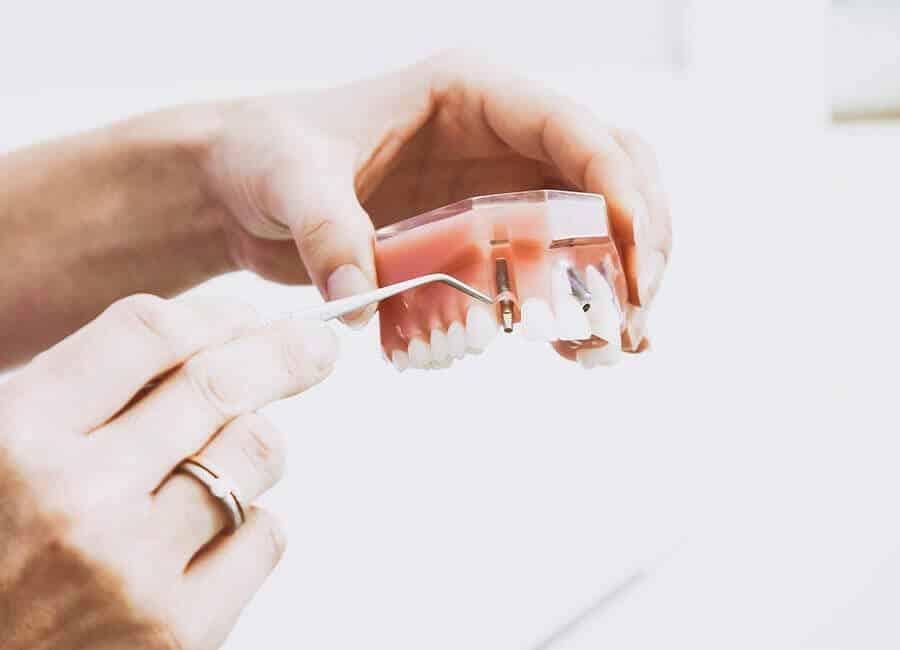
A dental implant is a small titanium post that is placed directly into the jawbone, acting as an artificial tooth root. Once the implant has fused with the bone (a process called osseointegration, which takes a few months), a crown is attached on top to create a tooth that looks, feels, and functions just like the real thing.
Implants are widely regarded as the gold standard for tooth replacement, and at Stricklands we offer a full implant service with in-house CT scanning for precise planning.
How They Compare
Longevity
Dental implants are built to last a lifetime with proper care. Bridges typically last 10 to 15 years before they may need replacing, as the underlying teeth and supporting structure can change over time.
Impact on neighbouring teeth
This is one of the biggest differences. A bridge requires the two teeth on either side to be filed down and crowned, even if those teeth are perfectly healthy. An implant stands alone and leaves neighbouring teeth completely untouched.
Bone health
When a tooth is lost, the jawbone beneath it gradually begins to shrink. An implant stimulates the bone just like a natural tooth root, preventing this bone loss. A bridge sits above the gumline and does not address bone deterioration.
Treatment time
A bridge can typically be completed in a few weeks. An implant involves a longer process, often several months from placement to final crown, because of the healing time required after the implant is placed.
Cost
Bridges tend to have a lower upfront cost than implants. However, when you factor in the likelihood of replacement over time and the potential impact on the supporting teeth, implants often represent better long-term value.
Suitability
Not everyone is a candidate for implants. Sufficient jawbone density is needed to support the implant, and certain health conditions or medications may affect healing. A bridge may be the more appropriate solution where implants aren’t suitable.
Which Should You Choose?
There’s no single right answer. The best option depends on your oral health, your budget, how important longevity is to you, and whether the teeth adjacent to the gap are healthy.
As a general guide, an implant may be the better choice if you want the most natural-feeling, long-lasting result and your jawbone is in good condition. It’s also preferable if the neighbouring teeth are healthy and you’d rather not have them crowned unnecessarily.
A bridge may be the better choice if you need a quicker solution, if implants aren’t suitable for you medically, or if the teeth on either side of the gap already need crowns anyway.
The Best Next Step
The most important thing you can do is have a proper consultation so that your options can be assessed in the context of your specific mouth, health history, and goals. At Stricklands, we take the time to explain everything clearly and help you make a decision you feel confident about.
If you’d like to explore your options for replacing a missing tooth, we’d love to hear from you.





Recent Comments